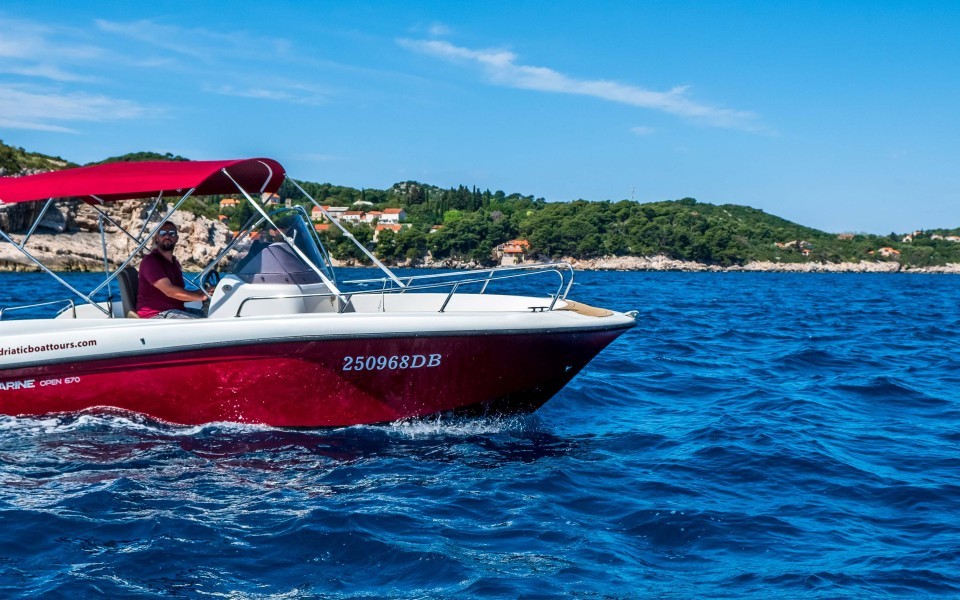
Safety tips for your Adriatic boat trip
A boat trip along the Dubrovnik coast can take you from sheltered bays to island beaches and sea caves within a single day. Enjoying those places safely starts with choosing a suitable vessel, understanding the conditions and knowing what to do before entering the water.
Whether you are planning a private excursion or a family outing around the Elafiti Islands, a flexible route and a clear safety briefing are essential parts of the experience.
Choose a boat that suits your group
The right boat should match your group size, planned activities and comfort needs. Consider shade, seating, access to the water and how easily everyone can move around on board. A swimming ladder matters particularly when travelling with children or anyone who finds climbing difficult.
Tell the operator in advance about young passengers, limited mobility or concerns about swimming. Ask whether appropriately sized life jackets are available for everyone, including children.
For visitors unfamiliar with the area, a skippered trip provides local support with navigation, anchoring and changing sea conditions. Share your priorities before departure so the skipper can suggest a realistic route.
Check marine weather before departure
Clear skies over Dubrovnik do not guarantee calm water throughout the surrounding Adriatic Sea. Wind, waves and visibility can differ between sheltered bays and exposed crossings.
Consult the Croatian Meteorological and Hydrological Service’s marine forecast and warnings, alongside the operator’s assessment. A general weather app showing sunshine does not provide the full picture for boating.
Let conditions determine the itinerary. If the skipper recommends a sheltered beach instead of an exposed island stop, accept the adjustment. Keep the return journey in mind: a comfortable outward crossing does not guarantee equally favourable conditions later in the day.
Pay attention to the onboard briefing
Before the vessel leaves, know where the life jackets are stored and how to put yours on. Ask about the location of emergency equipment, safe seating and the procedure if someone falls overboard.
Children and less confident swimmers should wear properly fitted life jackets whenever exposed to a risk of falling into the sea. Follow the skipper’s instructions about when all passengers should wear them.
While underway, remain in designated seating unless the crew says it is safe to move. Use handholds, keep bags out of walkways and avoid sitting on the bow or boat edges without permission. During docking, keep hands and feet clear of the gap between the boat and shore.
Prepare for sun, spray and a longer day
Shade can be limited on smaller boats, and cooling wind can make prolonged sun exposure less obvious. As you prepare for your boat tour, bring sunscreen, sunglasses, a secure hat and lightweight clothing that covers your skin.
Keep drinking water accessible throughout the trip. Pack a light layer for wind or spray, even in summer, and protect your phone and essential belongings in a waterproof pouch.
Wear secure footwear with good grip when boarding or walking on wet surfaces. Keep alcohol consumption limited, especially before swimming, and tell the skipper early if you feel unwell.
Swim only when the skipper gives clearance
Wait until the boat is secured and the skipper confirms that entering the water is safe. Locate the ladder and understand how you will return before jumping or climbing in.
Never enter the water near a running propeller. Stay away from neighbouring vessels and avoid swimming across routes used by arriving or departing boats.
Swim with a companion and remain within the area agreed with the crew. Children need continuous attention from a designated adult; flotation toys do not replace supervision or life jackets.
At sea caves, including Blue Cave stops near Dubrovnik, follow the guide’s assessment of waves, access and boat traffic. Never assume an entrance is safe because other visitors are using it. Avoid diving into unfamiliar water, where submerged rocks may be difficult to judge.
Know how to get help and return safely
Keep your phone charged and know the vessel’s name and approximate location. In Croatia, 195 connects callers to maritime search and rescue, while 112 is the general emergency number. Help can also be requested on marine VHF channel 16.
If an incident occurs, alert the skipper immediately. When contacting emergency services, describe your location, what happened, how many people are involved and whether anyone is injured. Follow the dispatcher’s instructions.
Allow time for the return crossing and docking. If your trip extends towards night, keep walkways clear, secure loose belongings and follow the crew’s directions as visibility decreases. Before stepping ashore, wait until the boat is secured and the skipper confirms it is safe to disembark.


